Spine biomechanics
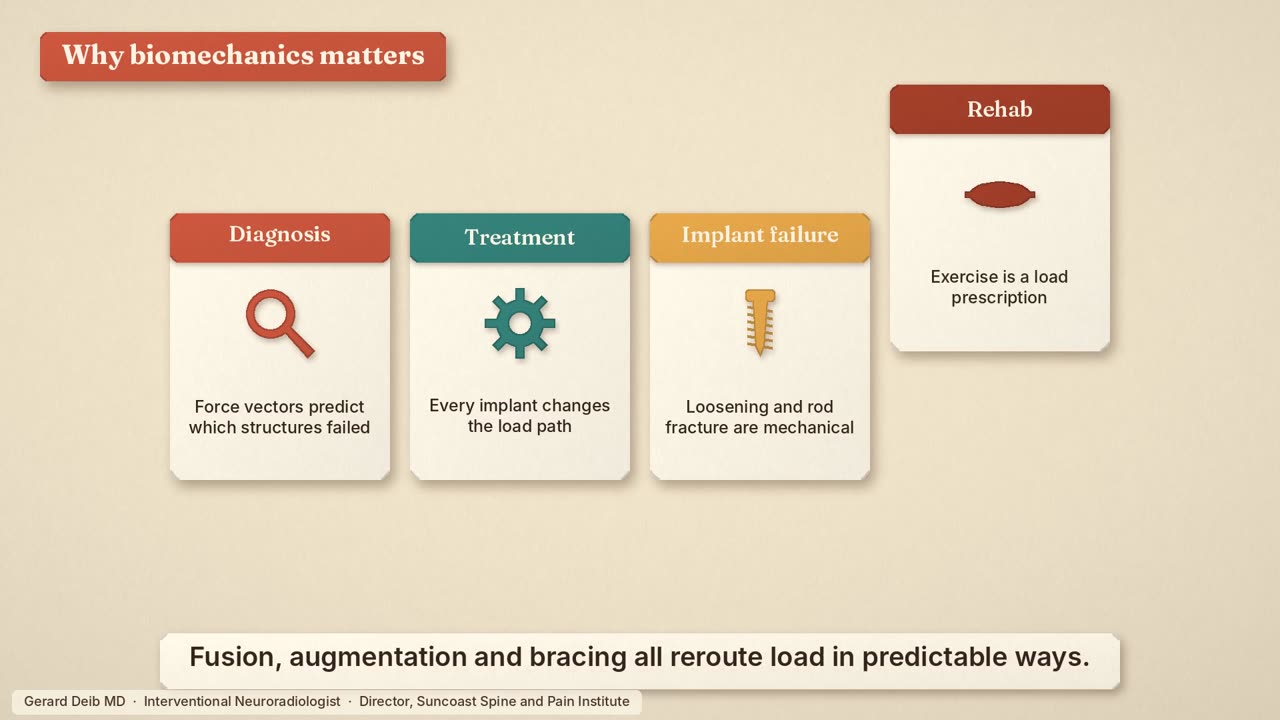
A 40-part lecture series in 20 sessions, from the basic mechanics of bone, disc and ligament through alignment, degeneration, trauma and fragility fracture, to how decompression, fusion, motion-preserving implants and interventional procedures change the way the spine carries load.
1.1Foundational mechanics
- 1.1Foundational mechanics
- 1.2Kinematics and stability
- 2.1Bone and disc mechanics
- 2.2Facets, ligaments and muscle
- 3.1Cervical and thoracic biomechanics
- 3.2Lumbar and sacropelvic biomechanics
- 4.1Intradiscal pressure and posture
- 4.2Muscle forces and cumulative load
- 5.1Stability systems
- 5.2Motor control and pain
- 6.1Spinopelvic parameters
- 6.2Compensation and cervical alignment
- 7.1The degenerative cascade
- 7.2Pain generators
- 8.1Spinal cord mechanics
- 8.2Nerve root mechanics
- 9.1Injury mechanisms and classification
- 9.2Cervical and special trauma
- 10.1Bone quality and fragility fracture
- 10.2Vertebral augmentation and fixation
- 11.1Scoliosis and kyphosis mechanics
- 11.2Correction and junctional failure
- 12.1Lumbar decompression mechanics
- 12.2Cervical and MIS decompression
- 13.1Screws, rods and constructs
- 13.2Interbody fusion and failure
- 14.1Disc arthroplasty
- 14.2Non-fusion technologies
- 15.1MIS fusion and the SI joint
- 15.2Interventional pain biomechanics
- 16.1Pediatrics, aging and athletes
- 16.2Disease-specific mechanics
- 17.1Exercise and manual therapy
- 17.2Bracing, ergonomics and return to activity
- 18.1Radiographic measurement
- 18.2Advanced imaging and wearables
- 19.1In vitro testing and modeling
- 19.2In vivo standards and regulation
- 20.1Planning, robotics and implants
- 20.2AI, regeneration and metabolic health
These videos are for general education and are not medical advice for any individual. Disclosures